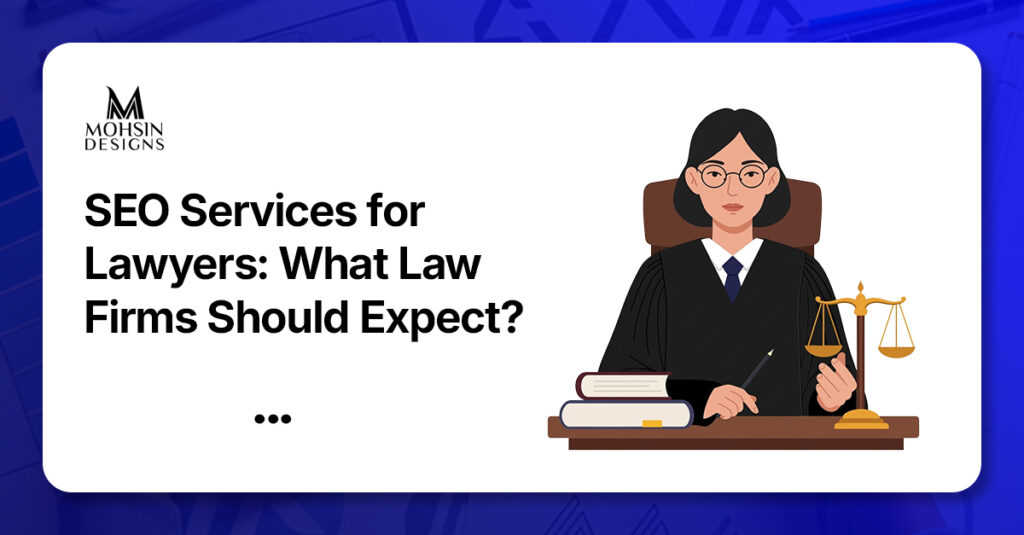
If your law firm is not showing up when people search for legal help, you may be losing clients before they ever contact you. SEO services for lawyers should fix that by helping the right people find the right legal pages, then turning those visits into calls, forms, and consultations.
Legal clients are rarely browsing just to read. They may be dealing with divorce, a business dispute, an injury claim, an immigration issue, or a criminal charge. Hence, before selecting a lawyer, they want quick, clear answers and a sense of security. That is why law firm SEO must do more than add keywords. It should build trust, improve local visibility, support useful content, and track real leads.
Why Legal SEO Matters
SEO for law firms is not just about traffic. It is about attracting the right visitors at the right time. A person searching for “lawyer near me” or “divorce lawyer in Dubai” is much closer to hiring than someone reading a general legal definition.
A strong SEO plan helps your firm in three ways:
- It shows your pages to people who need legal help.
- It guides visitors to the correct practice-area page.
- It turns those visits into leads you can actually follow up on.
If SEO does not help with those goals, it is not doing its job.
Right Page, Right Visitor
A law firm website should not send every visitor to the homepage.
If someone is looking for divorce help then it should land on a divorce page. Similarly, someone searching for contract support should land on a business law page. This makes the website easier for people to use and easier for Google to understand.
Trust Before Contact
Most people do not call a lawyer unless they feel some trust first. That trust can come from attorney profiles, reviews, office details, legal experience, and a clear website layout. Good website design helps the firm look professional and easy to contact.
What SEO Services Should Include
A good legal SEO plan should be practical, clear, and focused on results. It should not be a vague monthly report with no real action behind it.
Here is a quick table for what a complete plan should include:
| SEO service | Why it matters |
| Legal keyword research | Targets searches that can bring cases |
| Practice-area pages | Helps each legal service rank separately |
| Local SEO | Helps clients find your firm nearby |
| Technical SEO | Helps search engines crawl your site |
| Content writing | Answers legal questions in simple words |
| Reviews and trust | Builds confidence before people call |
| Lead tracking | Shows what brings calls and forms |
Mapping Legal Searches to Client Needs
Legal SEO becomes stronger when each search is connected to a real client need. Not every keyword has the same value.
Some searches show early research. Some show urgent action. Some show a person is ready to hire.
Search Intent in Legal SEO
Not every search means the same thing. Some people are researching. Some are comparing law firms. Others are ready to contact a lawyer today.
Practice-area keywords
These include terms like family lawyer, business lawyer, personal injury attorney, immigration lawyer, criminal defense lawyer, and real estate lawyer. They should appear naturally on the correct pages, not stuffed across the site.
For example:
- A divorce lawyer page should focus on separation, custody, and settlement questions.
- A personal injury page should explain accidents, claims, and compensation.
- A business law page should cover contracts, disputes, and compliance.
Location-based searches
Many clients search by city or “near me.” A smart SEO services Dubai plan should support local searches with strong service pages and clear location signals.
Problem-based searches
Some users do not know the service name. They search by problem instead. They may ask what to do after a car accident, how to respond to a divorce notice, or whether a contract can be changed. Helpful content can answer those questions and guide them to the right page.
Clean site structure
Visitors should quickly find practice areas, attorney details, contact information, and office location. Clear menus and internal links help both users and search engines. If the site feels confusing, people leave before taking action.
Technical health
If pages are slow, broken, blocked, or hard to crawl, rankings can suffer. Google’s crawling and indexing documentation explains that site owners need to help Google find and parse content correctly so pages can appear in Search.
A solid legal SEO plan should include technical SEO optimization, speed checks, sitemap review, mobile testing, crawl fixes, and indexing checks.
On-page setup
Titles, meta descriptions, headings, URLs, alt text, and internal links all matter. Each page should focus on one legal topic only. A divorce page should not try to rank for criminal defense, business law, and immigration at the same time.
Practice Pages That Rank
Practice-area pages are often the most important pages on a law firm website. These pages explain what services you offer and who you help.
A strong page should cover:
- The legal problem.
- Who the service is for.
- How the firm can help.
- What the client can expect.
- Common questions.
- Clear next steps.
Thin pages usually do not perform well. Helpful pages build trust and answer basic questions.
Lawyer examples that help
Here are a few examples of how this should look:
- A divorce lawyer page can explain child custody, alimony, and next steps after separation.
- A business lawyer page can explain contracts, disputes, and company setup support.
- An immigration lawyer page can cover visas, petitions, and document requirements.
- A personal injury attorney page can explain claim timelines, evidence, and consultation steps.
If you need support creating strong legal content,SEO content services can help make pages easier to read and rank.
Local Visibility for Law Firms
Local visibility matters because most clients want a lawyer close to them. They may also want someone who understands local courts and local business needs.
A strong local SEO plan should include:
- Location pages.
- Google Business Profile optimization.
- Local citations.
- Reviews.
- Consistent name, address, and phone details.
Your Google Business Profile should include the right category, services, photos, office details, and active updates. Avoid copied city pages. Each location page should be unique and useful.
A firm with strong local visibility is easier to trust because it looks active, real, and nearby.
Content That Builds Trust
Content can bring visitors before they are ready to call. Many people search legal questions first because they are unsure what to do.
Useful content may include:
- Legal guides.
- FAQs.
- Process pages.
- Cost pages.
- Comparison posts.
- Local legal articles.
- Common mistake guides.
Good legal content should be simple, calm, and helpful. It should explain, not confuse. You can also use ideas from top SEO strategies to build stronger long-term content.
What content should answer
Your content should answer real questions like:
- What happens during a consultation?
- How long does a legal process take?
- What documents should I bring?
- When should I contact a lawyer?
- What are my next steps after a legal issue starts?
That kind of content helps people feel informed before they call.
SEO Audit Before Growth
Before starting a new campaign, a law firm should know what is already working and what is not. An SEO audit checks rankings, website health, backlinks, mobile performance, speed, indexing, internal links, and local SEO setup.
An audit may reveal:
- Missing practice-area pages.
- Weak location pages.
- Duplicate content.
- Broken links.
- Slow pages.
- Poor keyword targeting.
- Unclear calls to action.
A good audit should give a clear plan, not just a list of problems. It should tell the firm what to fix first and why that matters.
What Not to Buy
Some SEO services look useful in reports but do not bring real leads. Law firms should avoid:
- Copied city pages.
- Spam backlinks.
- Fake traffic reports.
- Keyword stuffing.
- AI content with no legal care.
- No lead tracking.
- Reports with no clear action.
If traffic goes up but calls and forms do not, the campaign needs a closer look. Real SEO should support business growth, not just vanity numbers.
Reports That Matter
A monthly SEO report should be easy to understand. It should show what was done, what changed, and what comes next.
| Report item | What it shows |
| Phone calls | Whether SEO is bringing direct inquiries |
| Contact forms | Which pages are bringing leads |
| Keyword movement | Which terms are improving |
| Top pages | Which legal pages get traffic |
| Local rankings | How the firm appears in nearby searches |
| Technical fixes | What website issues were solved |
| New content | What pages or blogs were added |
| Next steps | What will be improved next month |
Good reporting should connect SEO work to real business results. It should not just show traffic charts with no meaning.
Branding Also Matters
SEO brings people to your site. Branding helps them decide whether to trust you.
A legal website should look clean, serious, and professional. The logo, colors, photos, and page layout should all support trust. Strong logo design for lawyers can help your firm look more credible. Clear logo design services can support your long-term identity.
Branding does not replace SEO, but it helps SEO traffic convert better.
Choosing the Right Agency
The right attorney SEO agency should understand both SEO and legal marketing. It should explain the plan clearly and avoid big promises.
Look for an agency that offers:
- Legal SEO experience.
- Clear monthly reporting.
- Strong content quality.
- Technical SEO knowledge.
- Local SEO planning.
- Lead tracking.
- Honest communication.
You can also read this guide on how to choose the right SEO agency before deciding.
Why Choose Mohsin Designs
If you want transparent, truthful, and goal-oriented SEO assistance for your legal practice, go with Mohsin Designs. To help your company rank higher and receive more legal inquiries, we prioritize local visibility, practice-area content, technical improvements, reporting, and real lead growth.
Conclusion
SEO services for lawyers should help law firms get found, build trust, and turn visitors into real inquiries. A strong plan should include legal keyword research, practice-area pages, local SEO, technical fixes, helpful content, reviews, reporting, and lead tracking. Google explains that FAQ structured data can help eligible FAQ content appear in richer search formats, but rich results are not guaranteed.
The best SEO plan is not the one with the most tasks. It is the one that helps the right clients find the right legal service at the right time.
If your law firm wants stronger online visibility, contact Mohsin Designs and build an SEO plan that helps your website attract better legal leads.
FAQs
1. What are SEO services for lawyers?
They help law firms rank higher for legal searches. They also support leads, calls, and consultation requests.
2. Why do law firms need SEO?
Many clients search online before calling a lawyer. SEO helps your firm show up at that moment.
3. What should law firm SEO services include?
They should include practice pages, local SEO, technical fixes, content, reviews, and lead tracking.
4. How long does lawyer SEO take?
It usually takes a few months to show strong results. The timeline depends on competition and website quality.
5. What is local SEO for lawyers?
It helps law firms appear in nearby searches and map results. It focuses on local pages, reviews, and business profile optimization.
6. Do lawyers need separate practice-area pages?
Yes, each main service should have its own page. This helps users and search engines.
7. Can blog content help law firms get leads?
Yes, helpful blog content can answer questions before people call. It can bring traffic and trust.
8. What should a legal SEO report show?
It should show calls, forms, rankings, top pages, fixes, and next steps.
9. Is technical SEO important for law firm websites?
Yes, technical SEO helps search engines crawl and understand your site. It also supports speed and indexing.
10. How do I choose the right legal SEO company?
Choose one that explains its process clearly and tracks real leads. Avoid agencies that promise instant rankings.